Inshore vs Offshore Fishing: Which Charter Fits You
Every week we get the same first question from visitors planning a St. Petersburg fishing trip: should we book inshore or offshore? It is the right question, because the two trips share a dock and almost nothing else. Different water, different species, different boats, different budgets, and very different days.
Neither one is the better charter. There is only the better fit for your group, your stomachs, your schedule, and what you want hanging on the line. Here is the honest comparison we give people on the phone.
What is the difference between an inshore and offshore charter?
Inshore charters fish the protected waters of Tampa Bay, the flats, mangrove shorelines, and passes, targeting snook, redfish, spotted seatrout, and seasonal tarpon on light tackle, usually within sight of land. Offshore charters run into the open Gulf, often 20 to 50 miles, dropping baits on hard bottom, ledges, and wrecks for snapper, grouper, kingfish, and other heavyweights. Inshore days are shorter and calmer; offshore days are longer, rougher, and priced to match the fuel and hours.
If you picture casting to shorelines and watching birds work the flats, that is inshore. If you picture cranking something heavy out of deep water and taking fillets home, that is offshore.
What an inshore trip looks like
Inshore trips out of St. Petersburg typically run four to six hours in calm, protected water around the grass flats of Tampa Bay, Fort De Soto, Weedon Island, and the mangrove islands of Boca Ciega Bay. The casting is active, the scenery is constant, dolphins and manatees make cameos, and seasickness is almost never a factor. It is the right call for kids, first time anglers, and anyone who wants steady action over marathon hours.
The species list runs with the seasons: spotted seatrout and redfish year round, snook staged around mangroves and passes in the warm months, sheepshead stacked on structure in winter, plus jacks, ladyfish, flounder, and mackerel keeping rods bent. Snook and redfish are tightly managed, with harvest windows that change, so your captain will know what can legally hit the cooler on any given date. From April into summer, tarpon turn the inshore world upside down and deserve their own trip entirely.
What an offshore trip looks like
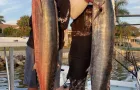
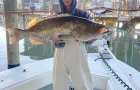
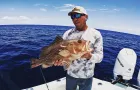
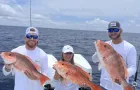
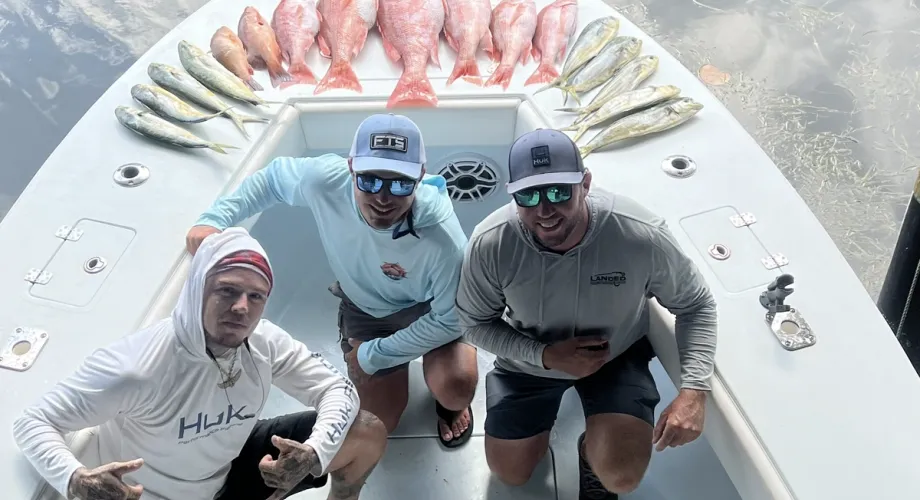
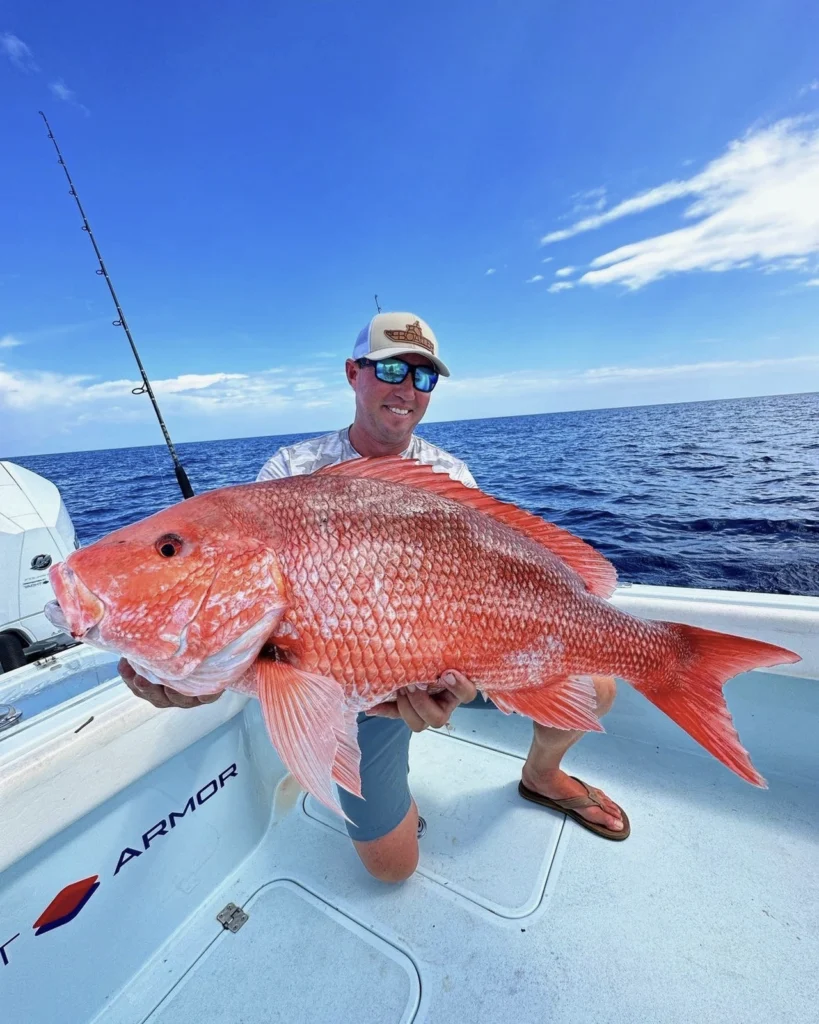
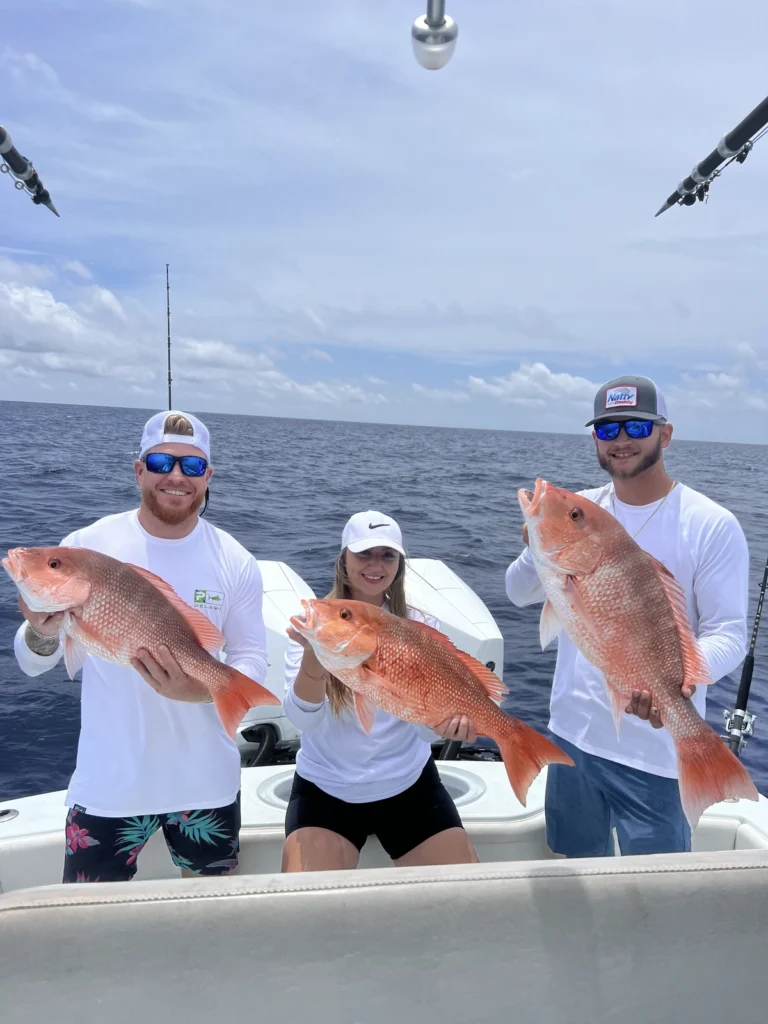
The Gulf shelf slopes gently off this coast, so real bottom fishing means real running: quality grouper and snapper water starts well offshore, and the best days push 30 to 50 miles. That makes offshore a six to twelve hour commitment on a bigger boat, with heavier tackle, and the payoff is the strongest pulls and the best eating fish in Florida. Red snapper anchor the summer, with a federal season that typically opens in early June, and gag and red grouper prowl the ledges and live bottom much of the year as their own seasons allow.
Spring and fall add kingfish runs past the beaches, cobia cruising markers and bait schools, and amberjack on the wrecks. Push far enough in summer and mahi become a possibility out in the blue water. Offshore rewards sea legs and patience with a cooler that thumps on the ride home, and it asks more of your budget and your morning alarm.
Time, comfort, and cost
Inshore trips cost less because the boat burns less and the day is shorter: figure roughly $550 to $750 for a typical half day out of St. Petersburg. Offshore trips start around $1,200 and climb past $2,500 for long range full days, and prices vary with fuel, season, and boat size. Split six ways, even offshore is reasonable per person, but the gap is real.
Comfort is the other honest variable. The bay stays fishable on days the Gulf is lumpy, and an inshore boat is always minutes from calm water and a bathroom stop at the dock. Offshore means committing to hours of open water, so anyone prone to motion sickness should medicate the night before and again in the morning, skip the heavy breakfast, and keep eyes on the horizon. Ask about the boat too: shade, seating, and a head make a long Gulf day far friendlier for a mixed group.
Which one fits your group
Choose inshore if you have kids under ten, first timers, a short window, or a group that values action and scenery over size. Choose offshore if your crew wants big fish, a full cooler, and does not mind earning it. There is also a middle path many visitors never hear about: nearshore trips to reefs and hard bottom within about nine miles, where mangrove snapper, hogfish, mackerel, and kingfish live without the marathon run.
When in doubt, tell your captain three things: who is coming, what a great day looks like to you, and how flexible your dates are. Any good St. Petersburg captain will build the right trip from those answers, and steer you honestly, even when it means booking the cheaper option.
Bottom Line
Inshore means calm water, light tackle, and constant action inside Tampa Bay; offshore means long Gulf runs for snapper, grouper, and serious pulls. The right answer follows your group, not the fish. Inverted Fishing Charters runs both out of St. Petersburg, plus nearshore trips that split the difference. Tell us who is on the boat and what you want out of the day, and we will point you to the trip that fits.
Related reading: our offshore fishing services, Best Times to Catch Tarpon in Tampa Bay